How to Label Moving Boxes the Right Way (So Nothing Gets Lost)
Good labeling is the five-minute investment that saves five hours at move-in. Here's the complete system: room, contents, fragile, priority — box by box.
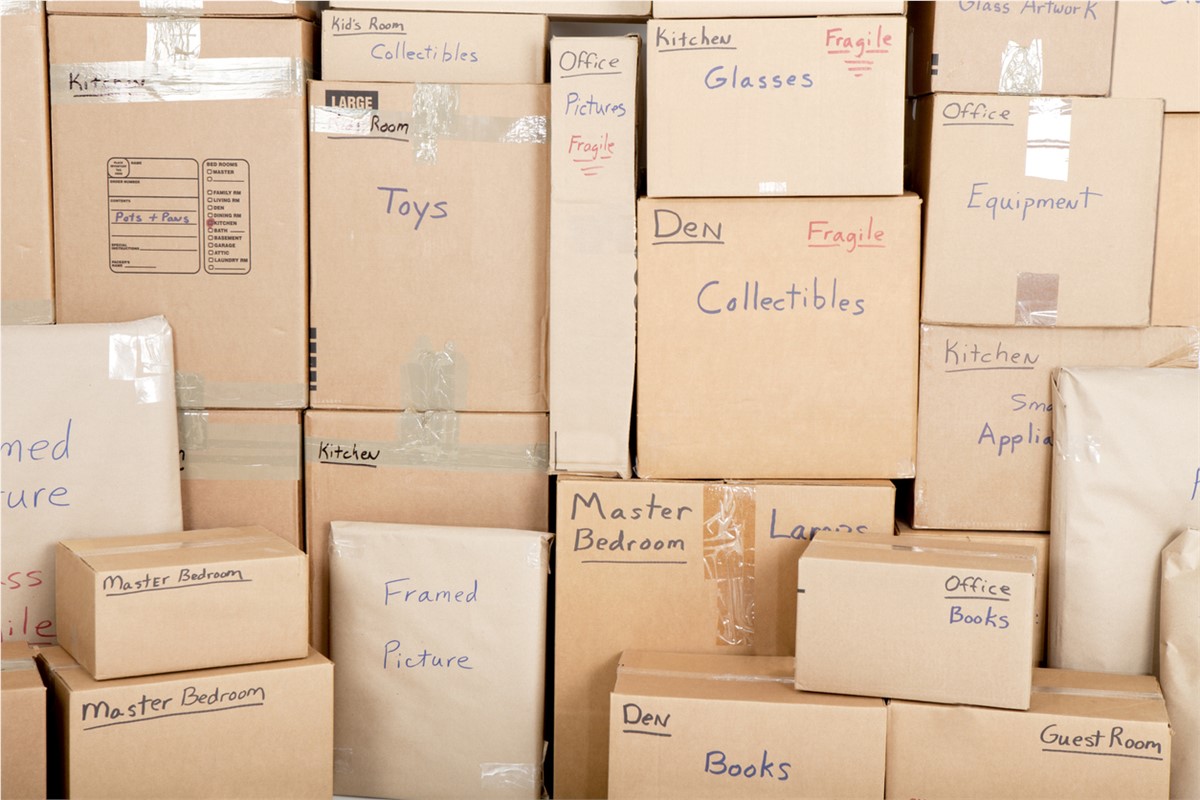
The most underestimated part of packing for a move isn't sourcing boxes or wrapping breakables — it's labeling. Good labeling costs virtually nothing, takes under thirty seconds per box, and is the single most reliable predictor of whether your move-in goes smoothly or devolves into a week-long scavenger hunt through identical stacks of cardboard tape. Bad labeling — or worse, writing nothing at all — guarantees that your moving crew has to guess where each carton goes, your first night requires tearing open six boxes to find your toothbrush and phone charger, and room-by-room unpacking becomes disorganized chaos.
Over the course of 5,000+ Philadelphia moves since 2017, Moverama crews have seen every variation of packing. We've seen homes where fifty identical, unlabeled boxes were stacked into a single living room corner, and we've seen color-coded, precision-marked moves where four movers placed 85 boxes into their exact destination rooms in ninety minutes flat. This guide covers how to build a simple, foolproof box labeling system that saves hours on move day and eliminates unpacking frustration.
Why Labeling Matters More Than You Think
Imagine your moving crew arriving at your new three-story Philadelphia rowhome with sixty boxes. Without clear labels, every box ends up staged on the ground floor or in whatever doorway has clearance. Without room designations, you're forced to make sixty individual decisions on the spot while furniture is being moved around you. Without content labels, you have to slit open every box to find tonight's coffee mug or tomorrow morning's work clothes.
Good labeling transforms move day from a chaotic sorting exercise into an efficient, streamlined operation. It costs five minutes per room during packing and saves hours of billed crew time and personal effort during move-in.
| Label Element | What to Write | Best Placement | Why It Matters |
|---|---|---|---|
| Destination Room | Room name + floor (e.g. "2nd Floor — Primary Bed") | Top AND 2+ sides | Allows crew to route boxes directly to the correct room without asking. |
| Content Summary | Specific items (e.g. "Pantry, Spices, Baking Tins") | Top & primary side | Enables targeted unpacking without opening sealed boxes. |
| Handling Alert | FRAGILE, THIS SIDE UP, HEAVY (40+ lbs) | All 4 sides + top | Ensures proper placement in the truck stack and prevents damage or injury. |
| Priority Flag | OPEN FIRST / NIGHT ONE | Top + bold border | Keeps essential toiletries, bedding, and chargers accessible immediately. |
The Two Non-Negotiables on Every Single Box
Every moving box — without exception — requires two fundamental pieces of information clearly written on the exterior:
- The Destination Room: Where this specific carton belongs in your new home.
- A Brief Content Description: What is actually inside the box.
For example, "Kitchen — Pots, Pans, Lids" tells your movers exactly where to carry the box and tells you exactly what is inside when dinner time rolls around. Writing only "Kitchen" helps the movers but leaves you guessing when you're looking for your skillet. Writing "Box #14" without a reference sheet tells nobody anything.
Never label only the top of a box: When boxes are stacked in the moving truck or staged against a bedroom wall, lids are completely covered. If your writing is only on the top, you and your movers have to unstack thirty boxes just to read the labels. Always write on the top and at least two opposite sides so markings remain visible from across the room.
The 5-Level Box Labeling System
A professional labeling system uses five progressive layers of information. Implementing this system turns unpacking into a calm, orderly process:
Level 1: Destination Room & Floor
This is the most critical routing piece. In Philadelphia, where narrow stairwells in rowhomes and trinity houses make carrying boxes up and down multiple times exhausting, specify the floor alongside the room:
- 1st Floor: Living Room, Kitchen, Dining Area, Half Bath
- 2nd Floor: Primary Bedroom, Nursery, Full Bath, Hallway Linen
- 3rd Floor / Attic: Home Office, Guest Bedroom, Roof Deck Access
- Basement: Utility, Seasonal Storage, Workshop
Level 2: Content Summary (Avoid "Misc.")
Write a concise, specific bullet list on the side. Avoid vague terms like "miscellaneous" or "living room stuff." Take twenty seconds to note the major items:
- "Primary Bed — Winter Sweaters, Dress Shoes, Belts"
- "Kitchen — Coffee Maker, Filters, Mugs, Everyday Plates"
- "Home Office — Laptop Dock, Monitor Cables, Desk Organizers"
- "Bathroom 1 — Shower Curtain, Towels, First Aid, Toiletries"
Level 3: Handling Instructions
Movers work quickly and handle hundreds of items in a single day. Make safety and handling instructions bold, high-contrast, and impossible to overlook:
- FRAGILE: Write this in large letters on all four sides for stemware, ceramics, electronics, and framed art. Crew members can only protect breakables if they know they are breakable.
- THIS SIDE UP (↑↑): Crucial for boxes containing liquids, lamps with harps, desktop towers, or small electronics.
- HEAVY (40+ LBS): Denotes book cartons, dense toolsets, or cast iron cookware. Staging heavy boxes at the base of a stack prevents crushing lighter boxes beneath them.
In a standard 24-foot moving truck, boxes are built into tight vertical "tiers" from floor to ceiling. Heaviest book boxes go on the bottom, medium cartons in the center, and fragile linens or lamps on top. Prominently labeling HEAVY and FRAGILE lets our loaders construct stable, damage-free tiers in half the time.
Level 4: Priority Flags ("Open First")
Identify the 2 to 4 cartons you cannot survive your first 24 hours without. Write OPEN FIRST in large red marker, or wrap a ring of colored tape around the edges. These boxes should hold:
- Bed sheets, pillows, and comforters for the first night
- Bath towels, soap, shampoo, and toilet paper
- Coffee maker, mugs, ground coffee, and a kettle
- Phone chargers, power strips, and vital medications
- A box cutter, scissors, and a roll of trash bags
Level 5: Storage & "Do Not Open" Flags
For seasonal decorations, archived tax files, or keepsakes heading directly to a dry basement or closet, mark STORAGE — DO NOT OPEN. Your crew can stack these deep in a back corner out of the way, keeping your primary living areas free of unnecessary clutter.
Color-Coding: The Fastest System for Philadelphia Homes
For multi-bedroom apartments, three-story rowhomes, or moves involving stairs, color-coding is dramatically faster than reading handwritten text alone:
- Pick 5–6 rolls of colored duct or electrical tape: Blue for Primary Bedroom, Yellow for Kitchen, Green for Living Room, Orange for Office, Pink for Bathroom.
- Apply tape to two corners of every box: Movers can identify where the box belongs from twenty feet away as they unload from the truck ramp.
- Post a Color Key at the front entrance: Tape a simple index card on the front door and at each stair landing: "2nd Floor Front = Blue (Primary BR), 2nd Floor Rear = Orange (Office)."
Tape a matching colored piece of construction paper or tape directly onto the doorframe of each destination room in your new home. Your movers won't need to ask a single question about where blue or yellow boxes go.
Room-by-Room Labeling Nuances
Kitchen: Break into Functional Zones
The kitchen is the densest room in any home and takes the longest to unpack. Never create generic "kitchen" boxes. Split them by function: Everyday Cookware, Baking Supplies, Pantry Canned Goods, and Fine Glassware (FRAGILE).
Bedrooms: Distinguish Seasonality
Label clothing boxes by season: "Primary — Off-Season Winter Coats" vs. "Primary — Work Clothes & Current Week". This ensures you only unpack what you need immediately, leaving off-season wardrobe boxes neatly stacked in the closet.
Office & Electronics: Cable Bagging
Label computer towers and monitors clearly. Before placing cords in the box, put each cord bundle into a clear zip-lock bag and label it with a Sharpie: "Monitor Power + HDMI" or "Router + Modem Cables". Tape the bag directly to the hardware or place it in the same box.
Books & Media: Small Boxes Only
Always pack books in small 1.5 cu. ft. "book boxes" and mark HEAVY on top and sides. Packing books in large cartons creates 80-pound boxes that risk bottom blowouts and back strains.
The 4 Most Common Labeling Mistakes to Avoid
- Writing "Misc." on Boxes: "Misc." is where lost items go to hide. It tells you nothing when you need your TV remote or corkscrew on night one. Spend 15 seconds to list 3 key items.
- Waiting to Label Until Everything is Packed: Once a carton is taped shut, you'll forget half of what went inside. Keep your Sharpie in your pocket and write contents as you pack, before applying tape.
- Using Ballpoint Pens or Light Pencils: Light ink is illegible in dim truck beds or evening hallways. Use thick, black permanent markers (Sharpie Magnum or chisel tip) with large 2-inch lettering.
- Skipping the First-Night Box: If your toothbrush, phone charger, and pajamas are scattered across five different unlabeled bedroom boxes, you will spend your first night exhausted and frustrated. Keep a dedicated First-Night kit with you in your car.
Frequently Asked Questions About Labeling Moving Boxes
What is the best marker to use for labeling cardboard boxes?
A black chisel-tip permanent marker (like a standard Sharpie King Size or Milwaukee Inkzall) is best. Thick black felt markers produce bold lines that remain legible in low light and from across the room. Avoid ballpoint pens, highlighters, or pencils, which fade or tear cardboard.
Should I number my moving boxes?
Numbering boxes (e.g. Box 1 of 45) is valuable if you keep a digital inventory spreadsheet or notebook listing what's in each number. For small to mid-sized moves, writing the destination room and a 3-item content summary on each box is typically faster and more practical than managing a separate numbering log.
Can I write directly on the cardboard box?
Yes. Writing directly on the cardboard with a permanent marker is the most reliable method because sticky labels or paper tags can peel off during transit or in humid weather. If you are using rented plastic moving bins or plan to resell your cardboard boxes, apply blue painter's tape or white masking tape first, then write on the tape.
How should I label boxes for a multi-floor Philadelphia rowhome?
Always include the floor number before the room name (e.g., "3rd Floor — Office" or "2nd Floor — Front Bedroom"). This allows the moving crew to carry the box directly up to the correct level on the first trip, preventing piles of boxes from blocking narrow ground-floor hallways.
Does Moverama label boxes if I hire professional packing services?
Yes. When you book Moverama's full or partial packing services, our trained packing crew systematically labels every box with destination rooms, detailed item descriptions, and fragile warnings. We supply all commercial cartons, packing paper, and tape.
Ready for a Smooth Move in Philadelphia?
Get a transparent, all-inclusive estimate from Moverama's five-star moving team.
Licensed · Insured · 5,000+ Philadelphia Moves Completed · Mon–Sun 7am–9pm